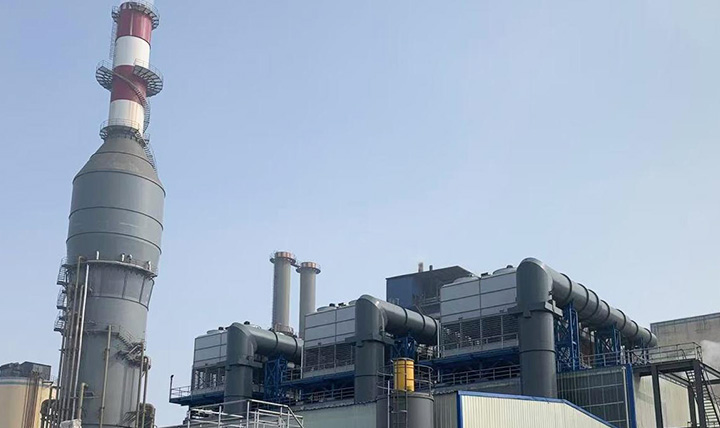
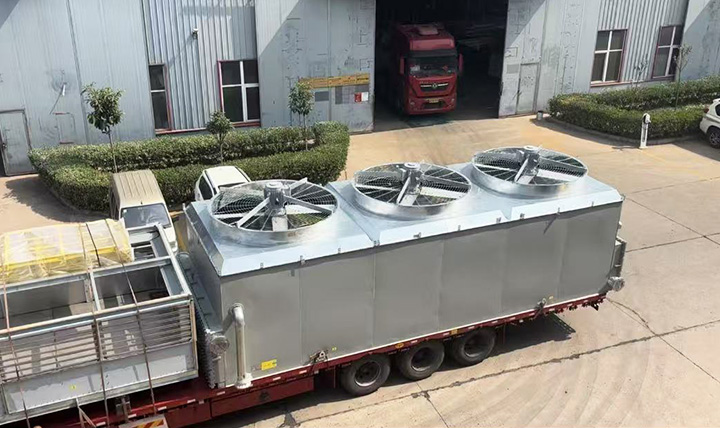
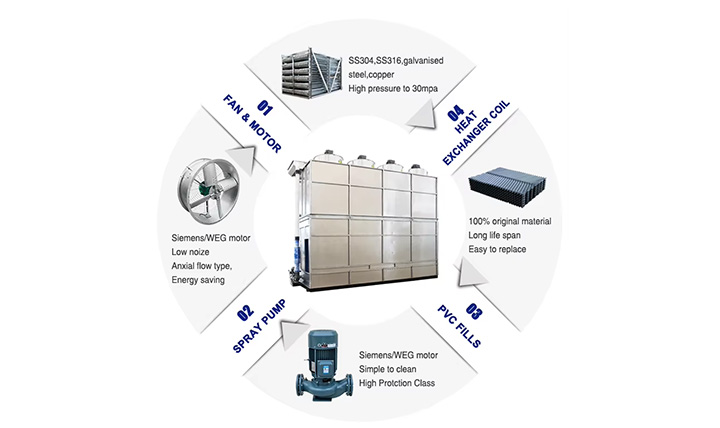
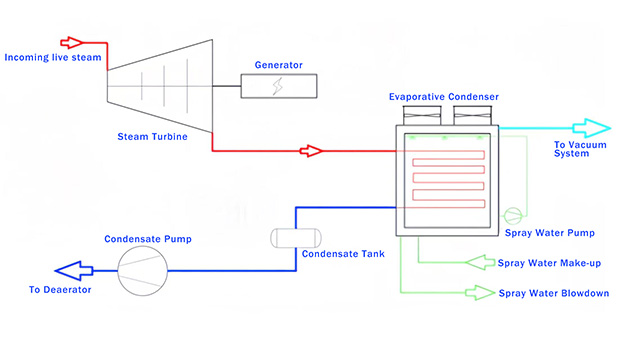
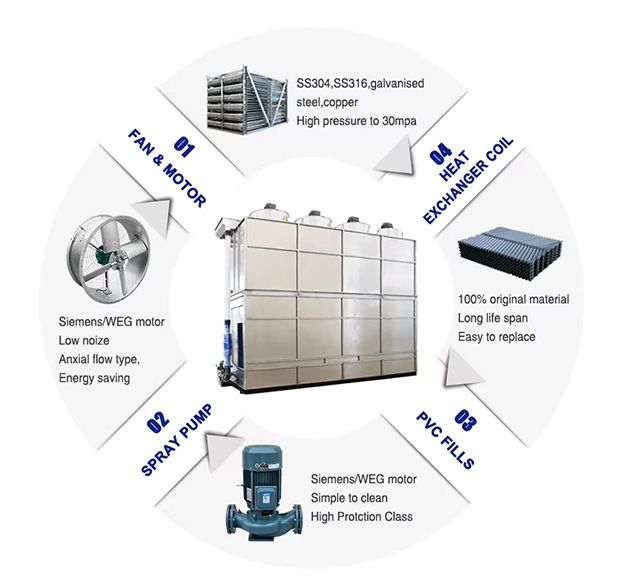
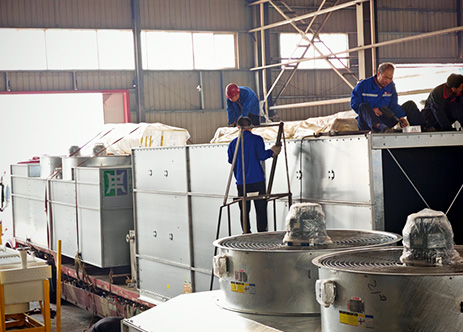
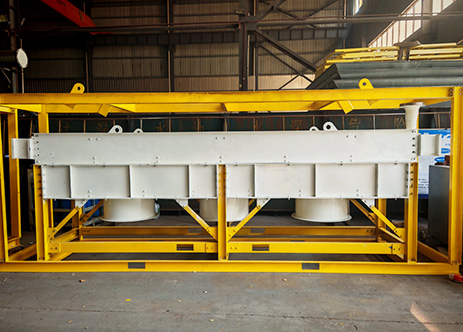
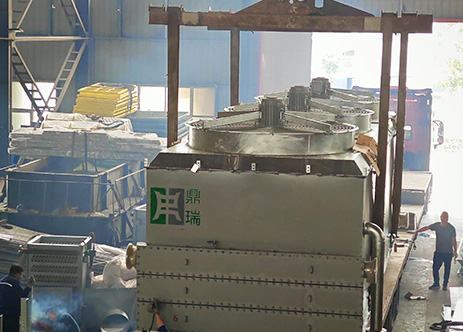
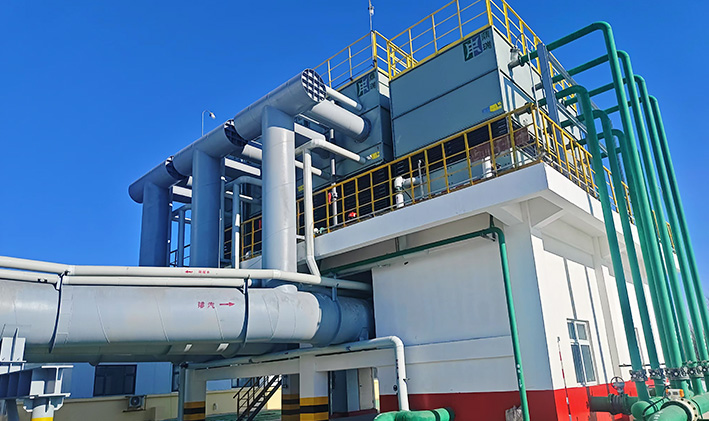
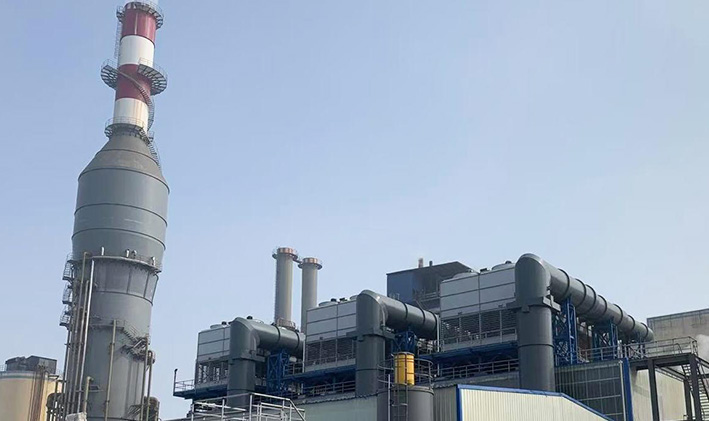
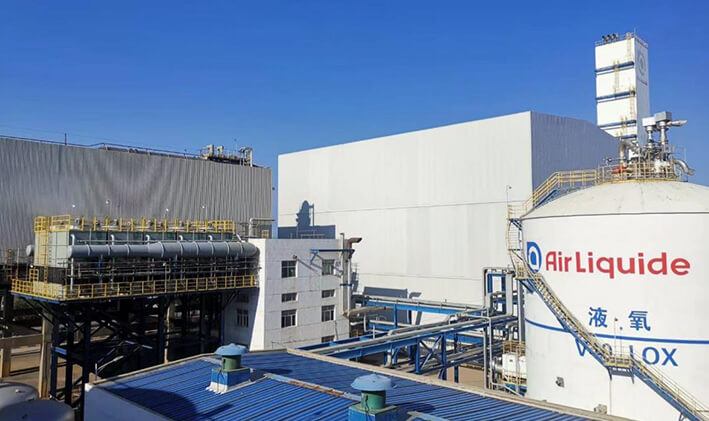
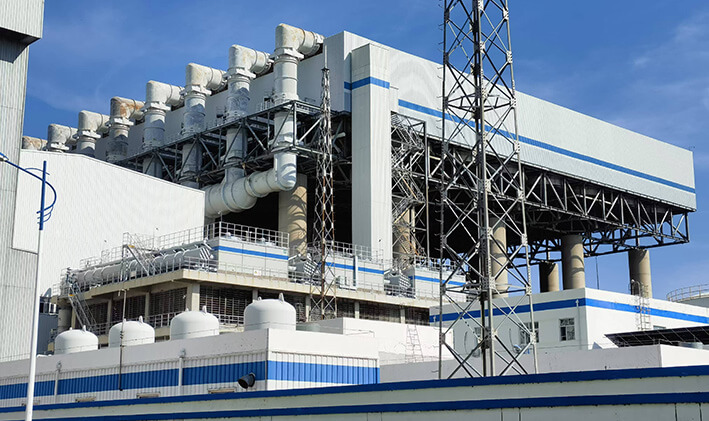
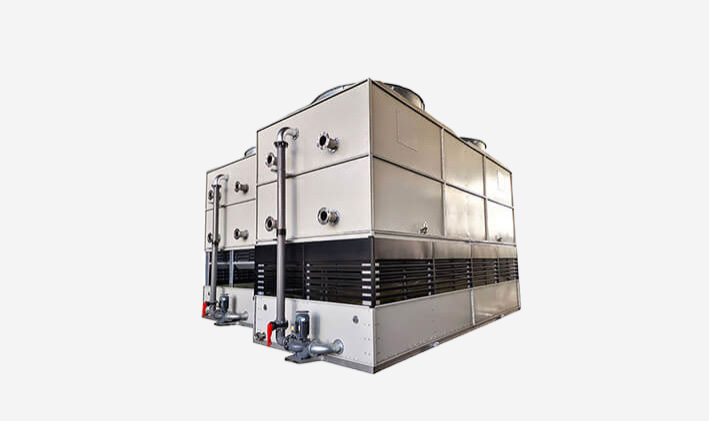
This system integrates and replaces the traditional steam turbine condensation system—comprised of a surface condenser, cooling tower, circulating water pumps, and other components—into a single skid-mounted package. The advantages are as follows:
a) High Efficiency: It primarily utilizes the latent heat of water evaporation for heat transfer, the effectiveness of which depends on the wet-bulb temperature. Compared to traditional condensation methods, it can achieve a lower backpressure, reduce energy consumption, and improve thermal economy.
b) Water Saving: Water usage is only required to maintain a uniform water film over the heat exchanger tube surface, with consumption approximately 1/4 to 1/3 of that in traditional water-cooled systems. A slight negative pressure is maintained inside the unit by the fan, resulting in a lower evaporation temperature and higher latent heat transfer.
c) Energy Saving: The system requires a smaller circulating water flow rate and lower pump head, leading to a significant reduction in pump power consumption compared to traditional condensation systems.
d) Reduced Impact from Ambient Temperature and Wind: The induced-draft fan design offers significant resistance to the adverse effects of ambient crosswinds.
e) High Degree of Automation: The system automatically adjusts the fan and pump operation based on ambient temperature changes to achieve optimal energy efficiency.
Additional benefits include low operating costs, a small footprint, a short installation period, simple operation, and high operational reliability.