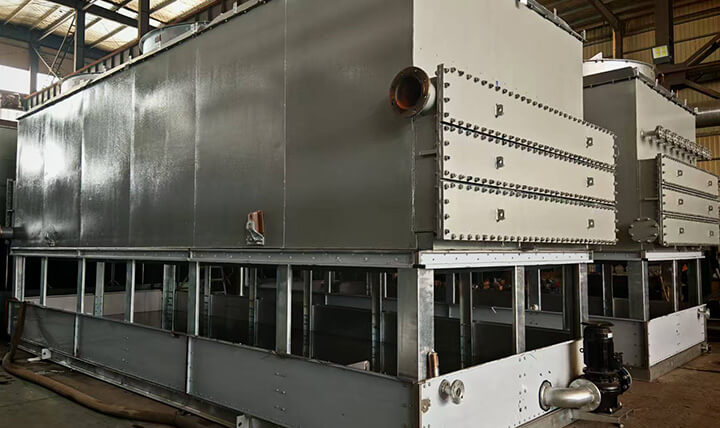
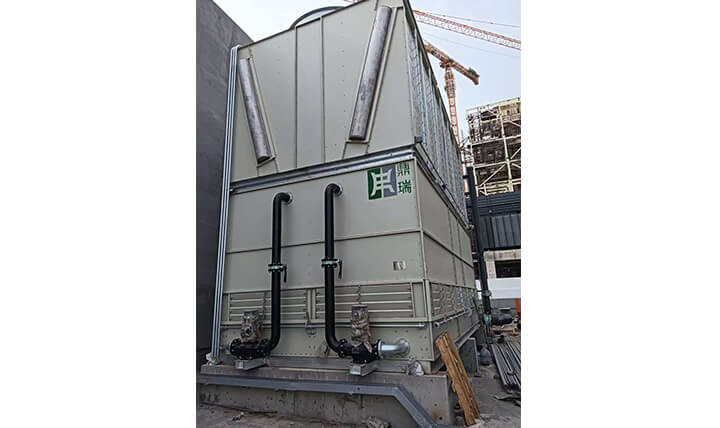
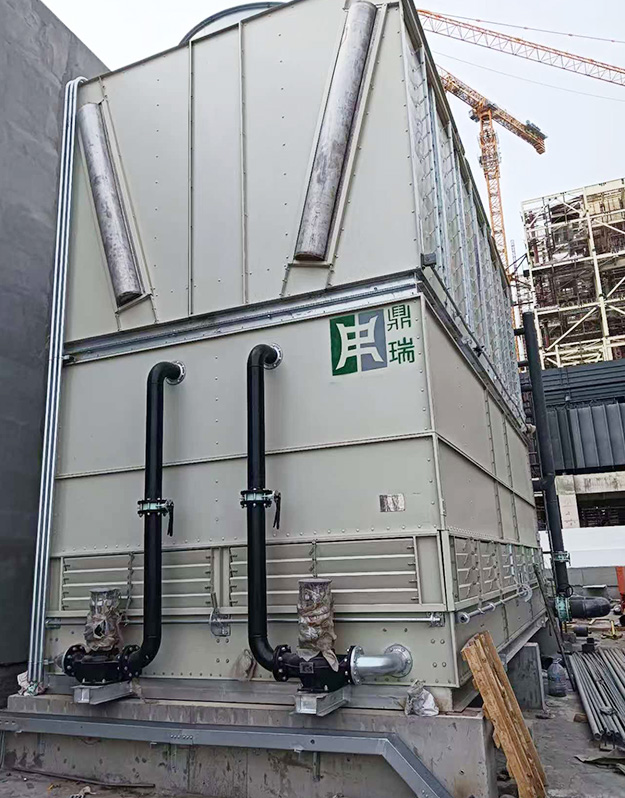
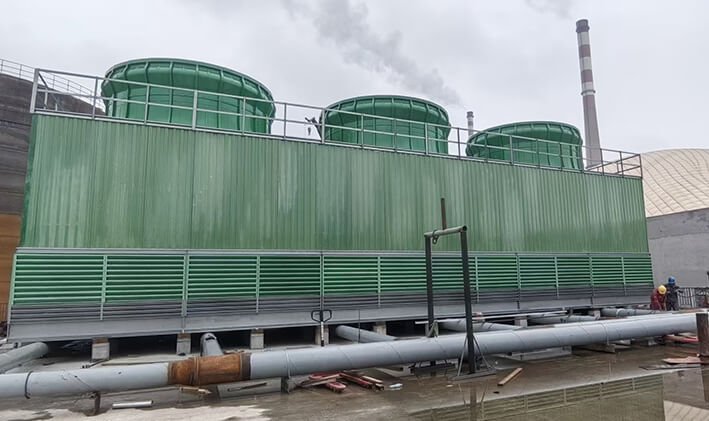
To enable heat exchangers to be applicable to a wider range of production processes and harsher on-site conditions, we optimize and combine different forms of heat exchange principles. Based on the high efficiency and energy-saving features of evaporative heat exchangers, and integrating the water-saving advantage of air-cooled heat exchangers, we have developed the Dry-Wet Combined Evaporative Air Cooler, realizing multi-stage utilization of kinetic energy and thermal energy.
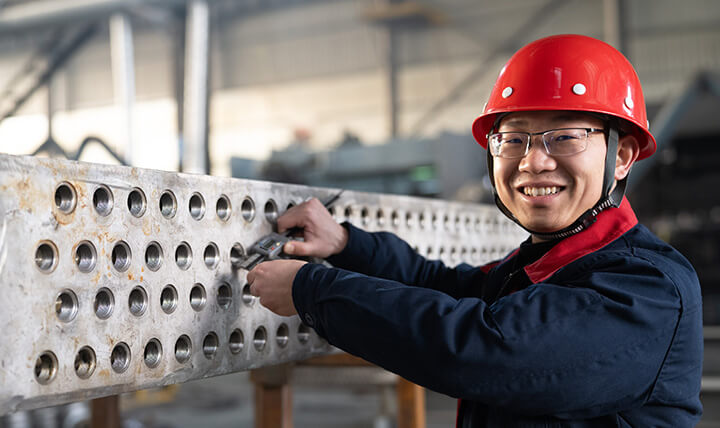
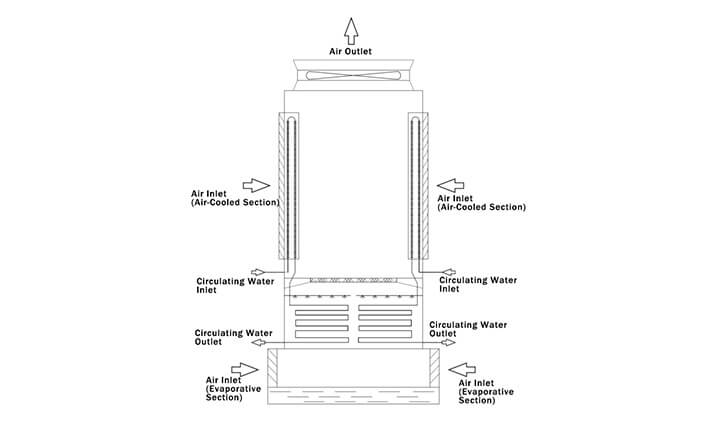
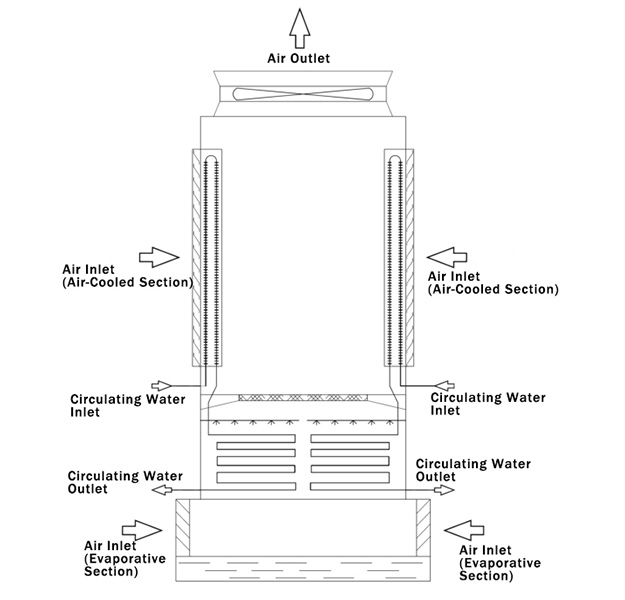
As shown in the figure above: The Integrated Dry-Wet Combined Evaporative Air Cooler is mainly divided into two parts: the evaporative section and the air-cooled section. On top of the evaporative section of the traditional closed cooling tower, air-cooled finned tube bundles and adjustable shutters are vertically arranged. The evaporative section and air-cooled section share a set of axial flow fans.
In terms of the process flow, the tube-side circulating water first enters the finned tube bundles (dry section) for cooling, and then flows through the evaporative section coils (wet section) for spray cooling.
The air outside the tubes is divided into two paths for heat exchange:
For the dry section: Ambient air undergoes partition wall heat exchange with the circulating water through the finned tube bundles. The air temperature rises while its humidity remains unchanged.
For the wet section: Ambient air exchanges heat with the spray water, and its humidity increases to reach a saturated state.
The dry section achieves cooling through ambient air and requires no water, realizing the goal of water saving.
After heat exchange, the dry hot air from the dry section and the humid hot air from the wet section mix inside the tower. This reduces the humidity and moves the air away from the saturated state, achieving the effect of reducing or eliminating white mist when the air leaves the cooling tower.